
Plenary Speakers
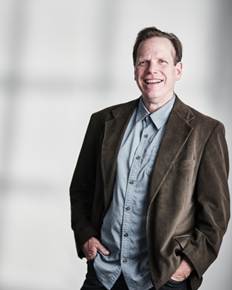
Prof. Kevin Plaxco, a Distinguished Professor at the University of California, Santa Barbara, holds appointments in the Departments of Chemistry and Biochemistry and of BioEngineering. Prior to joining UCSB in 1998, Dr. Plaxco received his Ph.D. from Caltech and performed postdoctoral studies at Oxford and the University of Washington. Dr. Plaxco’s research focus is on the physics of biomolecular folding and its engineering applications. A major aim of the group’s applied research is to harness the speed and specificity of folding in the development of sensors, adaptable surfaces, and smart materials. Dr. Plaxco has co-authored nearly 300 papers and two dozen patents on protein folding, protein dynamics, and folding-based sensors and materials. He serves on the scientific boards of a half dozen biotechnology firms, several of which are commercializing technologies developed by his group, and has also written a popular science book on Astrobiology.
Prof. Caroline Ajo-Franklin is the Ralph and Dorothy Looney Professor of BioSciences at Rice University and the Director of the Rice Synthetic Biology Institute. Her research uses biophysics and synthetic biology to engineer and explore the nanoscale interface between living microbes and inorganic materials. She is particularly interested in the basic mechanisms underlying charge transfer and assembly of materials at this living/non-living interface. Her research has applications in carbon capture and sequestration, biocomputation and biosensing, and novel living materials. She holds a B.S. in chemistry from Emory University and a Ph.D. in chemistry from Stanford University.
Dr. Elisabeth Lojou is a CNRS Research Director and leads the Bioelectrochemistry, Biointerface and Biotechnology group at Aix-Marseille University, France. Trained as a chemical engineer, she initially worked on lithium batteries before moving into bioelectrochemistry in 1995. Her research focuses on electron transfer between proteins and electrochemical interfaces, based on the concept that electrodes must be functionalized to mimic the physiological partner recognition for efficient interfacial electron transfer. A major contribution of her work is the identification of the molecular parameters governing enzyme immobilization for bioelectrocatalysis, particularly involving hydrogenases and multicopper oxidases, including the roles of orientation, surface charges, and environmental effects on activity and stability. She also developed advanced in situ and operando methodologies to correlate enzyme structure with function, opening new directions in copper-related bioelectrochemistry and enzyme metalation. Her work has applications in metal bioremediation, hydrogen sensing, and mediator-free H₂/O₂ enzymatic fuel cells. Beyond research, she is actively involved in scientific societies (ISE, BES, Groupe Français de Bioélectrochimie), assessment and editorial work, and contributes to mentoring and promoting gender balance in science.
https://bip.cnrs.fr/groups/bip08/
Prof. Eleni Stavrinidou (F, Linköping University is a Senior Associate Professor of Bioengineering at Linköping University, recognized for pioneering research at the intersection of organic electronics and plant science. She earned her BSc in Physics (2008) and MSc in Nanotechnology (2010) from Aristotle University of Thessaloniki, Greece. She completed her PhD in Microelectronics in 2014 at École des Mines de Saint-Étienne, France, focusing on ion transport in conducting polymers.
After her PhD, she joined Linköping University as a postdoc, pioneering the concept of Electronic Plants. She advanced to Assistant Professor (2017), Associate Professor and Docent (2020), and Senior Associate Professor (2023). Stavrinidou has received numerous prestigious awards, including a Marie Skłodowska-Curie Fellowship, ERC Starting Grant, and the Tage Erlander Prize, and since 2021 has been an Associated Group Leader at the Umeå Plant Science Center. Her research bridges plant biology and electronics to enable sustainable agriculture and novel biohybrid technologies that merge living systems with artificial components.https://liu.se/en/employee/elest58